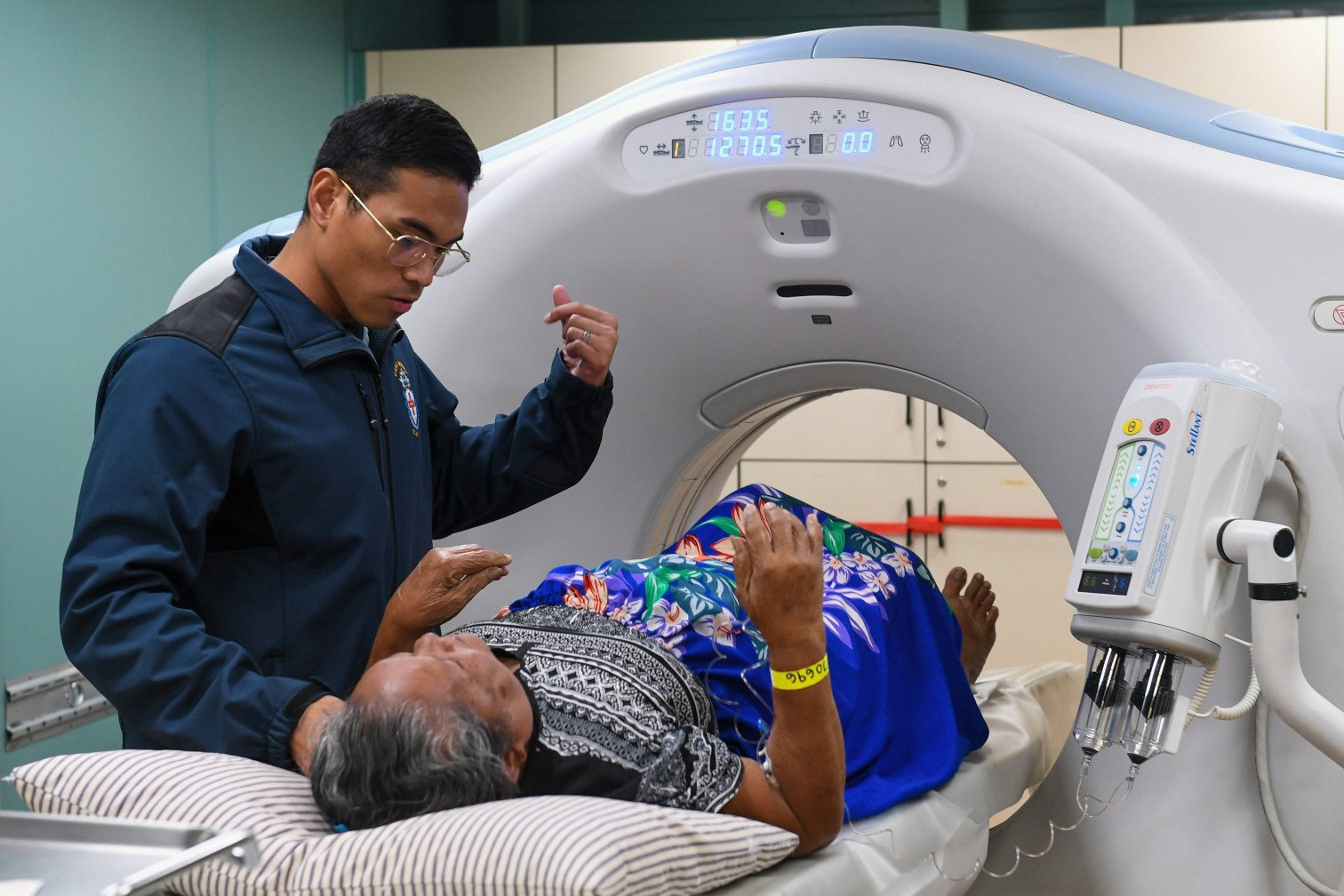
Learn what the scan is, what the visit feels like, and what happens after.
Lung cancer screening
Lung screening, step by step
Lung Cancer Screening Can Save Your Life
With screening, lung cancer can be found at an earlier stage, when cure is more likely.
Lung cancer screening includes a routine low-dose CT (LDCT) scan. The scan takes images of your lungs to check for signs of cancer.
LDCT scans are quick, painless, and you can keep your clothes on.
Getting a screening can feel scary, but it's one way to care for yourself.
What do you want to understand before scheduling your first appointment?
Are you eligible?Lung cancer screening is recommended for people who meet all of the criteria below. If you are unsure, you can talk with a clinician you trust and ask questions.
You may be eligible if all of the following apply:
Age: You are between 50 and 80 years old.
Smoking history (recent): You currently smoke cigarettes or have quit within the last 15 years.
Smoking amount (pack-years): You have smoked the equivalent of about 20 pack-years, such as:
1 pack a day for 20 years, or
2 packs a day for 10 years.
How to ask for a lung cancer screening
Talk to your primary care provider if you think you may be eligible for a lung cancer screening.
My dad died before he could teach my kids the things I wish he'd taught me: the arrowheads, the traditional pipes, the stories that went with them. His diagnosis came fast, and I think about how much sooner we could have talked about quitting.
This story is about: Family loss, lung cancer, and the value of catching it early
How screening works
It's normal to feel unsure before any medical test. If you choose to get screened, you can ask questions at any point, and you can take your time.
Here’s what happens...
Talk to your primary care provider
Talk with your primary care provider to see if you are eligible and if a screening makes sense for you. Medicare and most insurance companies cover lung cancer screening — talk to your insurance provider or clinic if you have any questions about cost.
During the scan
A low-dose CT is a quick and painless scan that takes pictures of your lungs to check for signs of cancer. You stay fully clothed, and it only takes a few minutes.
After the scan
Most people get results within 48 hours to a week. A radiologist and your primary care provider review the images and share the results with you. Your care team will discuss when to return for screening.
About results
Sometimes a scan can find a small spot or nodule, if that happens, the next step is often another scan later to watch it. Sometimes a scan could show something that needs more testing, but that also doesn't automatically mean cancer either. It just means your care team wants a closer look. If screening is the right fit for you, it is often done annually, so changes can be caught early.
It is okay to pause and ask, “Can you explain that in a simpler way?”
You deserve clear answers.
Understanding costMedicare and most insurance plans cover lung cancer screening for those who qualify. Ask your doctor for more information on lung cancer screening and insurance coverage.
It’s okay to ask questions before you decide anything. You deserve clear answers about how much a lung cancer scan is and if insurance covers it.
Before you schedule: You can ask your clinic and/or insurance plan:
whether the screening is covered
whether you need a referral
whether there may be any costs (like a copay, a deductible, or fees for follow-up tests)
If you’re not sure you qualify: That's okay. You can talk to a clinician you trust about your risk factors and what next steps make sense for you.
It’s okay to pause.
You can go back and choose a different path later.